Smarter Legal Research Through AI Innovation

One of the areas that has always required the greatest amount of time commitment is research in the practice of law. This has been the case ever since the legal profession was first established.  Ever since the profession was initially created, this has been the situation the entire time. To construct arguments and make certain that they are factual, solicitors and legal teams spend a significant amount of time going through various pieces of legislation, case law, and regulatory frameworks. Performing this action is done to guarantee that the arguments are sound. On the other hand, the growth of artificial intelligence is generating a big shift in the techniques that are utilised in the process of doing legal research. This movement is causing a considerable shift over time. Legal research is on the verge of becoming significantly more intelligent, efficient, and accurate than it has ever been before as a direct result of this shift.

Legal research systems that are powered by artificial intelligence make use of natural language processing and machine learning to examine very large volumes of legal material in a very short amount of time. As a result, these systems can accomplish this goal significantly.  This enables the systems to perform an analysis of the data in a manner that is extremely effective.     Lawyers now have the capacity to input questions in plain English, and very quickly after doing so, they will receive case summaries, laws, or precedents that are particularly relevant to their enquiries. This capability was previously unavailable to them.    Because of this advancement, solicitors are no longer necessary to manually sort through an infinite number of papers. This is a significant savings for the profession. Because of the efficiency of this system, legal professionals can focus more of their attention on providing service to their clients and developing strategies for effective representation.  This is since the system not only assists people in reducing the amount of time they spend searching for information, but it also makes it possible for them to focus more of their attention on doing so.

The power of artificial intelligence to give dependable results is one of the most significant advantages that it offers. When searching for information using the traditional approach, which involves making use of keywords, it is easy to overlook information that is of the utmost significance. In a great number of instances, this method produces an excessive number of results that are irrelevant to the search that was carried out. Artificial intelligence systems, on the other hand, can recognise context and intent in addition to keywords, which ultimately leads to the development of results that are more refined and that are more relevant.  As an additional benefit, the public can gain access to a bigger quantity of information because of legal research that is driven by artificial intelligence.  It is now possible for smaller firms and individual practitioners, who may not have the resources of major legal teams, to make use of these tools to compete more successfully. This is because these tools are now available.  This is since these materials are now accessible. This is because these materials are becoming more readily available. When this is accomplished, the playing field is levelled, which in turn stimulates increased originality and fairness throughout the duration of the entire profession.

In the field of legal research, which is expected to become more important in the years to come, it is anticipated that artificial intelligence will play a role in the sector. For legal organisations that are working towards the future to be successful, it is no longer an option for them to embrace artificial intelligence; rather, it is a requirement that must be met to achieve strategic success.  This is since artificial intelligence is becoming into an increasingly significant field. When professionals in the legal field make use of innovation throughout the entire legal process, they can give higher value, more expedient outcomes, and ultimately, more intelligent justice.  This is because they can bring about justice that is more intelligent.
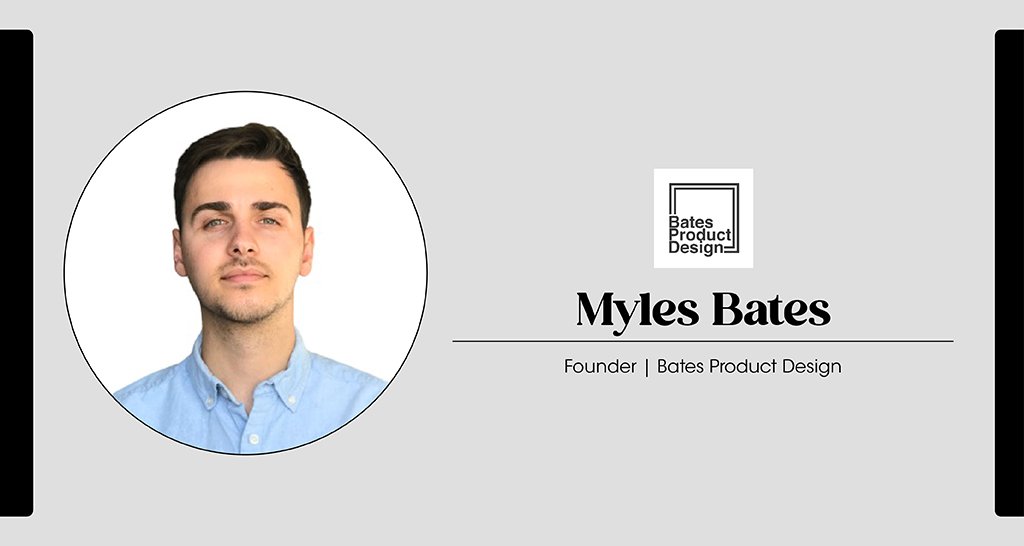
The Innovative Mind Behind Bates Product Design: Myles Bates’ Vision

Myles Bates is the visionary founder of Bates Product Design, bringing a strong foundation in mechanical engineering and medical device design, along with a Master’s in Engineering. With a passion for transforming ideas into market-ready products, Myles specializes in accelerated product development that combines efficiency, creativity, and cost-effectiveness. His expertise spans design, CAD, concept development, and in-house prototyping—empowering startups and businesses to bring their innovations to life. Under his leadership, Bates Product Design has become known for its agile, collaborative, and sustainable approach. Recognized by The Fortune Magazine as one of The Most Innovative Leaders in Engineering and Design Services in 2025, Myles continues to set new standards in the industry.

Inside the Interview

Can you briefly share your professional journey and what inspired you to enter the engineering and design services field?

Bates Product Design Ltd was born from a passion for turning ideas into tangible, meaningful products that improve lives. Our founder, Myles Bates, began as a mechanical engineer with a deep curiosity about how everyday objects are made. After gaining experience across industries—from medical devices to consumer electronics—he noticed a recurring problem: many brilliant product ideas from startups and small businesses never reached the market. The prohibitive cost of design services, coupled with inflexible, cookie-cutter agency models, made it difficult for SMEs to move forward. Myles saw an opportunity to do things differently. By offering a flexible, collaborative model—supported by a network of trusted experts without the overheads of a large agency—Bates Product Design was created to make high-quality design accessible and tailored to each unique project.

What do you believe sets your organization apart in terms of innovation and client impact?

At Bates Product Design, we don’t just design products—we design partnerships. Our client-centred approach sets us apart. We work hand-in-hand with inventors, entrepreneurs, and businesses to truly understand their vision and constraints. This collaborative spirit allows us to offer an agile, transparent, and emotionally intelligent development process. We invest heavily in prototyping and micro-manufacturing capabilities in-house, giving our clients rapid, cost-effective iterations that accelerate development and reduce risk. Our innovation isn’t limited to flashy tech—it’s about solving problems creatively, efficiently, and with lasting impact for our clients.

How do you stay ahead of technological trends and integrate them into your services or solutions?

Staying ahead of the curve is part of our DNA. We actively invest in emerging technologies, including high-speed 3D printing, micro-injection moulding, and digital simulation tools. Our team regularly participates in industry events, webinars, and technology showcases to ensure we’re not only aware of trends but ready to implement them effectively. By integrating these technologies into our workflow—such as using AI-assisted CAD tools or automating parts of our prototyping process—we improve speed, accuracy, and cost-efficiency for our clients.

What has been one of your most challenging projects, and how did you overcome it?

One of our most rewarding and challenging projects to date has been the development of Tidelight, a sustainably designed, UK-made ambient light. The vision was ambitious: design and manufacture the entire product within the UK using local suppliers and eco-friendly materials. We collaborated closely with trusted partners—including PCB manufacturers, traditional wood turners, and 3D printing experts—to develop the product. Every detail was thoughtfully sourced and tested locally, ensuring the design stayed true to its sustainable ethos. Thanks to this collaborative, community-driven approach, Tidelight successfully raised over £22,000 in pre-sales and is now available for pre-order at tidelight.co.uk. It’s a testament to what’s possible when sustainability and local innovation are at the heart of product development.

Sustainability and efficiency are key concerns today. How do your engineering/design solutions address these issues?

We embed sustainability into every phase of our development process. From material selection to manufacturing methods, we prioritise solutions that reduce waste, energy consumption, and environmental impact. We often guide our clients towards using recycled or recyclable materials and design for disassembly where possible, allowing for easier repair or recycling. Efficiency is also key—optimising part counts, simplifying geometries, and choosing local manufacturing options help us cut down lead times and reduce the carbon footprint of our designs. We also collaborate with several environmentally focused manufacturers who help thrive at brining our environmentally friendly products to life.

How do you foster a culture of innovation and creativity within your team or organization?

Our team thrives on openness, experimentation, and continuous learning. We encourage all team members, regardless of role, to contribute ideas and explore new approaches. Regular design sprints, collaborative sketching sessions, and technology demos keep our creative energy flowing. We’ve built a psychologically safe environment where ‘failing fast’ is seen as a valuable step in the innovation process. This culture allows us to maintain a high level of engagement and creativity across everything we do.

In what ways have client demands evolved over the past few years, and how have you adapted to meet them?

Clients today are more design-aware and environmentally conscious. There’s growing demand for end-to-end support, from idea validation to full-scale production. Many are asking for sustainable materials, rapid development, and cost-effective manufacturing solutions. Crucially, we’ve seen an increase in clients wanting UK-based design and manufacturing. In response, we’ve built strong partnerships with local manufacturers to streamline development. This allows us to test products live on-site, shorten production lead times, and ensure a seamless transition from prototype to market—all while supporting local industry and reducing environmental impact.

What emerging trends or technologies do you believe will significantly impact engineering and design services in the next five years?

We anticipate that AI-assisted design tools, generative design, and digital twins will become standard in the industry. These technologies allow for faster iteration, performance forecasting, and data-driven decision-making. Additionally, the growth of decentralised, small-batch, and on-demand manufacturing will revolutionise product development for startups and SMEs. The integration of emotional and behavioural insights into design will also continue to gain traction, helping brands deliver more human-centred, emotionally resonant products.

What advice would you give to future engineers and design leaders who aspire to lead with innovation and integrity?

Stay curious, stay humble, and always listen—especially to the people who will use your products. Innovation isn’t just about technology—it’s about empathy, practicality, and impact. Integrity means being honest about what’s feasible, guiding clients with care, and making decisions that benefit both people and the planet. Surround yourself with diverse voices, embrace iterative learning, and don’t be afraid to challenge convention. Real leadership in design means being bold enough to do things differently—and kind enough to bring others along with you.

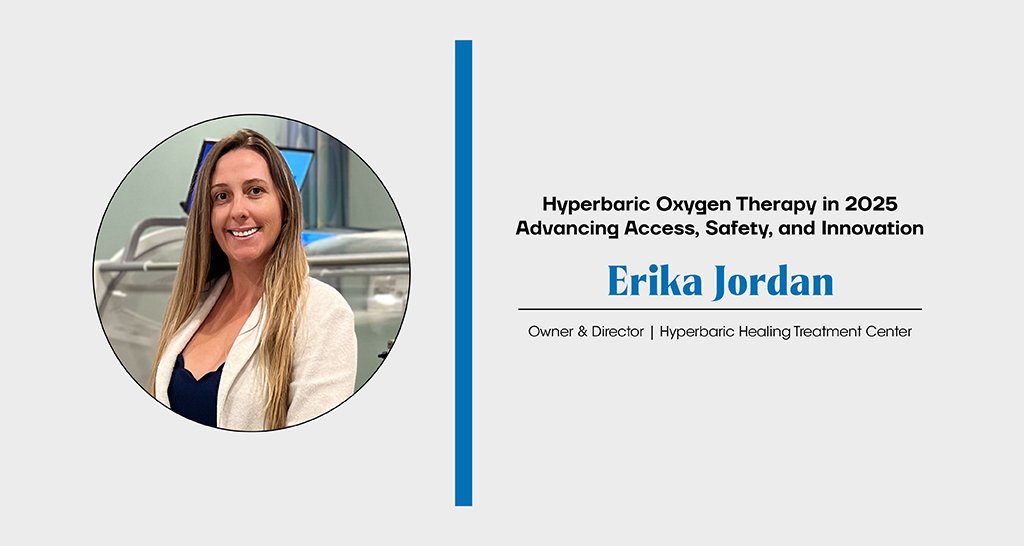
Hyperbaric Oxygen Therapy In 2025: Advancing Access, Safety, And Innovation

Erika Jordan, DMS, EMT, CHT, CHS Founder of Hyperbaric Healing Treatment Center

In recent years, hyperbaric oxygen therapy (HBOT) has seen a remarkable evolution. Once considered niche and reserved primarily for wound healing or diving-related injuries, HBOT is gaining widespread recognition for its benefits in treating neurological, inflammatory, and chronic conditions. As this momentum builds, it becomes more important than ever to ensure the field advances responsibly, inclusively, and with a commitment to quality care.

Clinical Research Fueling Broader Acceptance

HBOT’s increasing legitimacy in mainstream medicine is being propelled by high-level clinical research. One major milestone is the $28 million, state-funded clinical trial led by the University of South Florida. This double-blind, randomized controlled study is investigating HBOT’s effects on veterans with traumatic brain injuries (TBI). With participants undergoing 40 sessions, the results could have wide-reaching implications for insurance coverage, military medicine, and long-term neurological care. Studies like these bring credibility and much-needed data to a therapy that has often struggled for mainstream acceptance.

Unregulated Growth in the Private Sector

Despite its medical potential, the private HBOT sector remains highly inconsistent. Clinics vary widely in safety standards, equipment, and practitioner training. Without strong regulation, the industry risks jeopardizing patient safety. At Hyperbaric Healing Treatment Center, we emphasize rigorous training and medical oversight. A hyperbaric facility is only as safe as the professionals who operate it. That’s why we advocate for patients to do their research and ensure they’re receiving treatment from certified, experienced providers.

New Technology, Better Outcomes

Technological innovation is reshaping how HBOT is delivered. Today’s chambers are equipped with precise pressure controls, and safety redundancies that were not standard just a decade ago. HBOT is increasingly used alongside other wellness services like IV therapy, functional medicine, and regenerative care. This integrated approach enhances outcomes, especially for complex, chronic cases.

Developing the Next Generation of Providers

One of the most rewarding parts of my role is mentoring students and early-career clinicians. Since hyperbaric therapy is rarely taught in traditional medical programs, onboarding new talent requires intentional mentorship. But it’s worth the investment. We’re not just growing a workforce—we’re cultivating advocates for safety, evidence-based care, and innovation.

A Leadership Role Rooted in Purpose

As a woman in a highly specialized medical field, I’m proud to lead a business built on compassion, professionalism, and personal connection. I also serve as Operations Chair for the American Cancer Society’s Making Strides Against Breast Cancer committee—a role I’ve held for 7 years. It has connected me with inspiring peers, lifelong friendships, and a deeper understanding of community-based healing.

Women across healthcare are helping reshape the industry by prioritizing communication, empathy, and holistic leadership. These strengths, once considered secondary, are now seen as essential in improving both patient outcomes and workplace culture.

What the Future Holds

The next five to ten years could be transformative for hyperbaric medicine. I believe HBOT will be embraced more widely—used earlier in treatment plans, offered at more accessible locations, and backed by stronger clinical guidelines. National conversations, including one sparked by Robert F. Kennedy Jr. on expanding HBOT access, indicate broader change is within reach.

My vision is to bring HBOT to the patients who need it most—veterans, children, and underserved populations navigating complex medical conditions. By fostering responsible growth, interdisciplinary partnerships, and science-driven protocols, we can ensure this therapy continues to evolve into one of the most impactful tools in modern medicine.

Author Bio:

Erika Jordan is the founder and director of Hyperbaric Healing Treatment Center, with locations in Orlando and New Smyrna Beach, Florida. She holds certifications as a Certified Hyperbaric Technologist (CHT) and Certified Hyperbaric Specialist (CHS), with a clinical background in diagnostic medical sonography and emergency medical services. Erika brings over a decade of experience to advancing hyperbaric therapy through safe practice, education, and expanded access.

Jill Christensen: Most Visionary Keynote Speaker And Best-Selling Author

The Inspirational Journey

Jill Christensen dedicated 22 years to her career in Corporate America, ascending from entry-level management to an executive position. Although she appreciates the knowledge and experience gained during this time, Jill was deeply troubled by the pervasive dysfunction she observed. Frequently, she would leave the office questioning, “How does this company generate profit?” and found that nearly everyone she encountered shared a sense of disillusionment with their jobs. She was convinced that a more effective approach existed.

In 2009, Jill founded her business. Leveraging her background in Corporate America, where she managed Global Internal Communications, she acquired significant understanding of employee needs in the workplace. By integrating this expertise with data on factors that drive employee performance, she crafted an effective strategy. This methodology now serves as the cornerstone of her keynote presentations, written works, and consulting offerings.

What is Success in Business and Leadership

Success, first and foremost, entails establishing a profitable enterprise through the act of assisting others. Jill prioritizes service over financial gain, dedicating her efforts to support leaders and organizations in need, trusting that financial rewards will naturally follow and they have. Secondly, success involves the capacity to discern the next steps to take. Jill recognizes that her plan and timing are not of paramount importance; there’s a greater plan in play.

Lastly, success encompasses personal development and uplifting those around her. In a leadership role, it is essential to pursue continuous growth and improvement, while caring for others and doing everything possible to facilitate their success.

Key Takeaway from the Speeches

“Prioritize people. Employees will only engage when they feel your concern for them. Senior leaders play a crucial role in establishing the culture of ‘how we operate here.’ It is essential for you to take initiative and if not, make way for others. There is a wealth of leadership potential within you that is ready to be unleashed. You have merely begun to explore your capabilities as a leader and the significant contributions you can make to your team,” Jill remarked.

Role of leadership in Boosting Productivity, Retention, and Customer Satisfaction

“As I just said, no one sets the stage more for ‘how we do things here’ (the definition of culture) than senior leaders. When you make people a priority, they will go to the end of the Earth for you and the organization.  And that incredible discretionary effort equates to increased productivity, retention, and customer satisfaction,” added Jill.

It also equates to the granddaddy of them all – profitable revenue growth.  There is a direct correlation between how much effort employees give each day and bottom-line results.  The most profitable companies in the world and the companies that are growing the fastest, have the most productive, inspired, and engaged employees. 

Change that Managers Can Enact

Facilitate Focus Groups. Managers often make decisions that affect individuals without seeking input from those impacted. This oversight can be detrimental. To encourage employees to exceed expectations, it is essential to provide them with a platform to express their opinions and ensure they feel acknowledged. After collecting feedback and making decisions, it is important to communicate the rationale behind those choices. Explaining the reasoning is crucial, as it provides context. Context is vital because it helps the recipient understand the significance of the information, the assumptions to consider (or disregard), and adds meaning to the communication.

Books, Programs, and Initiatives

Jill has recently crafted a keynote address featuring important new data from global employees, and she has also produced Edition Three of her acclaimed book, If Not You Who? Cracking the Code of Employee Disengagement.

Jill has also begun her role as a speaker coach at The Speaker Lab, where she trains emerging speakers on the realities of this profession, a field she is passionate about.

In addition to that, Jill attunes herself to the Universe. She has faith that new opportunities will arise and that individuals will enter her life who are destined to assist her in various ways. She is fully convinced that there are greater plans in store for her.

Achievements

From time to time, following Jill’s keynote presentation, a member of the audience approaches her with the statement, “We need to improve our culture, and we would like your support throughout the entire process.” In such cases, Jill engages in a one-year consulting contract to assist the organization in transforming its culture.

Jill has assisted every organization she collaborates with in achieving a double-digit increase in their employee engagement scores within a year. Her most notable achievement? She enabled a medical center to elevate its employee engagement from 47 percent to 87 percent in just six months.

Jill takes pride in asserting that her strategy is effective across all industries, in every nation, and among every generation of employees.

Future Roadmap

“This is not my journey; it is guided by a higher power. The Universe holds my blueprint. I remain attentive to what lies ahead, embracing the uncertainty with enthusiasm. I sense that greater opportunities await me, a feeling deep within. I am prepared and filled with gratitude,” concluded Jill.