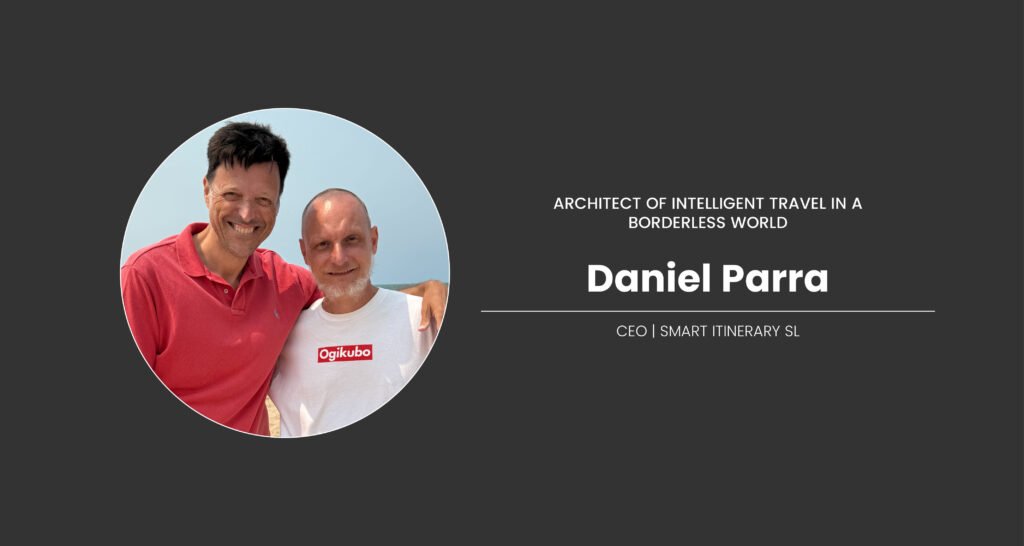
In an era when travel has become as much about personalization as it is about movement, Daniel Parra stands at the intersection of technology, human curiosity, and cultural intelligence. As CEO of SMART ITINERARY SL, Parra represents a new generation of global leaders those who understand that innovation is not just about building platforms, but about reimagining experiences. His journey, shaped by years of working and living across borders, including Japan, reflects a leadership philosophy grounded in adaptability, empathy, and relentless evolution.
At its core, ITINERARY was born from Parra’s greatest passion: travel itself. Yet unlike traditional tourism entrepreneurs, he did not set out merely to sell trips. He sought to solve a deeper problem how to transform the invisible, time-consuming work of creating personalized itineraries into a scalable, digital-first solution without losing the human soul of travel.
A Leadership Style Built on Flexibility and Trust
Parra’s leadership style is defined less by hierarchy and more by synergy. Operating a company with managers and partners spread across multiple countries requires constant communication, cultural sensitivity, and flexibility. He leads primarily through online collaboration, ensuring that despite geographical distances, the team remains aligned and motivated.
What unites the ITINERARY leadership team is a shared love for travel. This common passion has shaped the company’s culture into one that values curiosity, openness, and user empathy. Parra believes that happy teams build better products and in a remote, globally distributed workforce, maintaining that happiness requires trust rather than control.
The Birth of SMART ITINERARY: From Insight to Platform
The inspiration behind ITINERARY emerged from Parra’s firsthand experience working in tourism. He observed a growing demand for highly personalized travel plans custom itineraries crafted carefully for each traveler. Ironically, this critical service was rarely reflected in invoices, despite requiring hours of expert effort. Parra recognized that automating this process digitally was not just an efficiency play; it was the future of travel planning.
The turning point came during a culinary trip, where he met Manuel de Morales, who would later become his co-founding partner. The connection was immediate. Parra shared his vision, and de Morales instantly recognized its potential. When the COVID-19 pandemic temporarily froze global travel, it also created something else: time. The two reconnected, refined the concept, and laid the foundation for ITINERARY. From those uncertain months emerged a company that steadily evolved improving its technology, securing funding rounds, and expanding its vision beyond borders.
Innovation as a Shared Responsibility
For Parra, innovation is non-negotiable especially in a digital business. But rather than centralizing creativity at the top, he distributes it across the organization. Many of ITINERARY’s key employees are also partners, aligning ownership with vision. This structure ensures that innovation is not forced but organic, driven by shared belief in where the company is headed.
Brainstorming is embedded into the company’s rhythm. Meetings are not just for reporting but for imagining. Parra emphasizes that there are no “bad ideas,” only ideas that may not survive evaluation. Encouraging people to speak freely, even imperfectly, is far better than silence. In his view, teams that stop sharing ideas stop growing.
Navigating Complexity Through Transparency
One of the most defining leadership challenges Parra faced came from managing technological growth. Early on, ITINERARY partnered with a small IT company in Pakistan specializing in GIS, led by their CTO. As the platform expanded, a much larger company, TK Analytics, joined as a partner and took over software management.
Instead of replacing one with the other, Parra made the unconventional decision to keep both teams working together. The challenge was no longer technical it was human. Aligning multiple companies, cultures, and workflows required radical transparency and flexibility.
The experience reinforced a core leadership lesson: clarity and honesty are the glue of complex partnerships. When everyone understands the vision and their role within it, collaboration becomes possible even across continents.
Technology with a Human Face
ITINERARY’s value proposition lies in its ability to blend digital efficiency with human expertise. The platform connects users directly with affiliated travel professionals tour guides, local experts, and service providers allowing bookings and direct communication within the same ecosystem.
Parra believes that while technology can optimize processes, it should never erase the human touch. Travel, after all, is deeply personal. By combining automation with access to real specialists, ITINERARY offers users the best of both worlds: speed and soul.
Talent, Accountability, and Hard Decisions
Nurturing talent, in Parra’s view, begins with recognition and reward. When good ideas and hard work are visibly appreciated, motivation follows naturally. But leadership also requires accountability. He is candid about the difficulty of firing underperforming employees, yet firm in his belief that unresolved issues can damage an entire organization.
He compares such situations to a small illness ignored, it spreads; addressed early, it protects the whole. This balance of empathy and decisiveness has been instrumental in maintaining a healthy company culture.
Resilience in Times of Uncertainty
Parra understands that disruption is inevitable. Since its inception, ITINERARY has pivoted multiple times, adapting to market realities and user needs. Keeping a close eye on competitors and trends is part of the job but resilience is the true differentiator.
During difficult periods, Parra made a symbolic yet powerful decision: he cut his own salary more than anyone else’s. The message was clear leadership shares the burden. This act of solidarity helped the team weather the storm with unity and trust intact.
Lessons from Japan’s Innovation Ecosystem
Although ITINERARY operates globally, Parra’s years living and working in Japan profoundly shaped his leadership outlook. He emphasizes that success in Japan requires deep respect for language, customs, and unspoken norms. Leaders must either master these themselves or rely on trusted local partners who can bridge cultural gaps.
Equally important is humility the willingness to listen, adapt behavior, and accept guidance. In Japan’s innovation ecosystem, progress is built on precision, respect, and long-term relationships.
Looking Ahead: 2026 and Beyond
As 2026 approaches, Parra’s ambitions are clear. ITINERARY is preparing to launch its mobile app, a milestone expected to significantly expand its affiliate network, user base, and revenue. Geographic expansion is also on the horizon, with new markets such as Greece in focus. The goal is to achieve strong performance metrics and secure a Series A funding round in 2027, positioning the company for its next phase of global growth.
A Philosophy of Constant Change
Parra often reflects on how quickly the world evolves. He points to Netflix a company that began in 1997 as a DVD-by-mail service while Blockbuster dominated physical rentals and earned hundreds of millions from late fees. The lesson is clear: dominance today guarantees nothing tomorrow. “The world is changing very rapidly, and we must change with it,” Parra believes.
In that mindset lies the essence of his leadership. Not clinging to what works, but constantly questioning what comes next. In redefining how people plan and experience travel, Daniel Parra is not just building a company he is designing a future where innovation moves as freely as the travelers ITINERARY serves.
- 📌 Visit Daniel Parra 👉 – LinkedIn Profile
- 🌐 Explore ITINERARY 👉 – Company Website